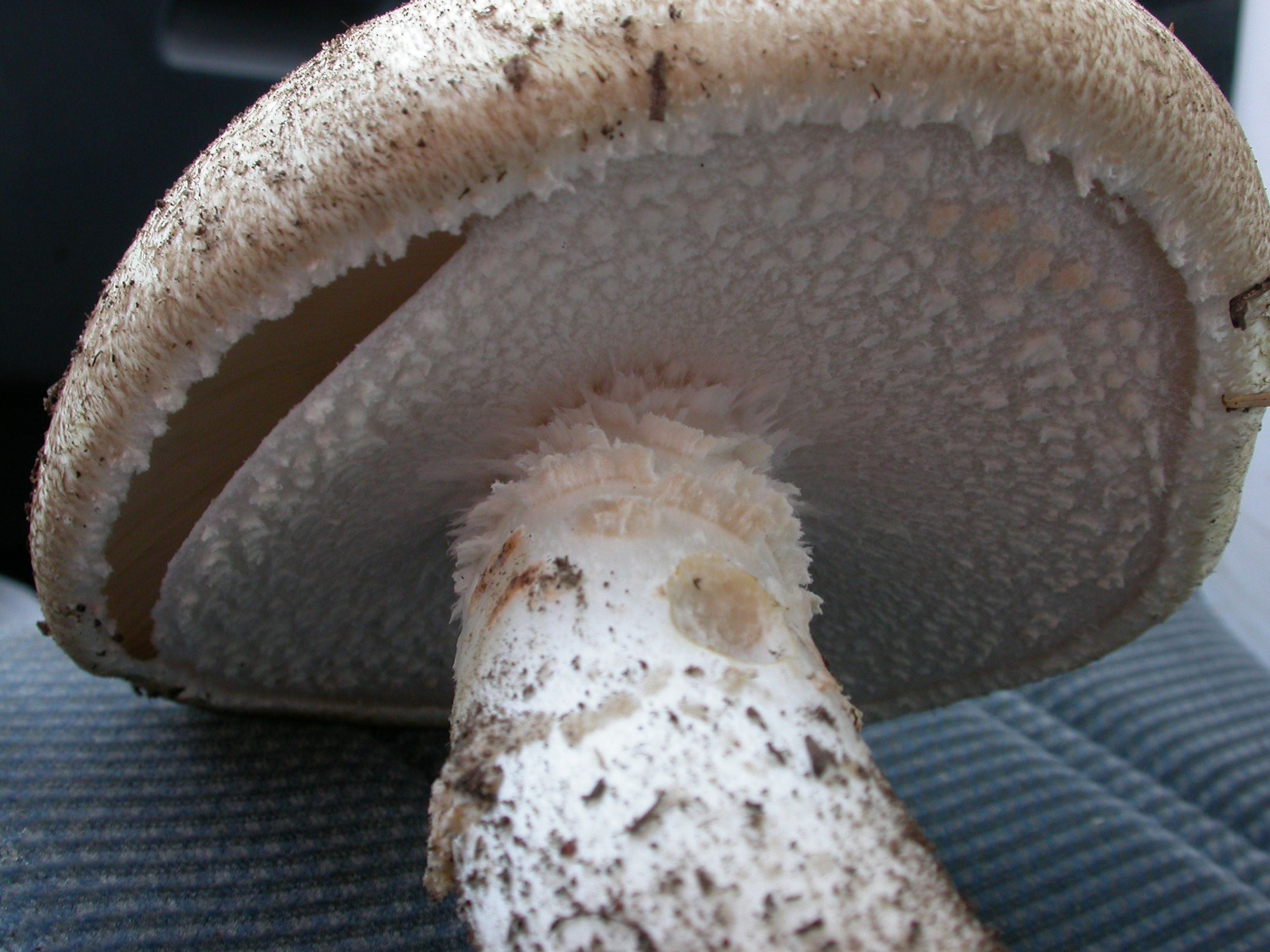
Agaricus augustus, or “The Prince,” so named because it is considered “the prince” of edible mushrooms, second in flavor only to “The King” bolete. Its flavor is both fungal and nutty, and a little sweet. Its main distinguishing characteristic, though, it its smell – like amaretto or maraschino cherries. Visually it looks much like other members of the genus Agaricus, which is to say it looks much like a portobello. The main visual difference between augustus and other Agariceles is the fact that, when young, its gills are creamy white rather than pink, and as it ages turn pinkish-brown and then the dark chocolate brown typical of a mature Agaricus. Its very fibrillose, nearly woolly stem also sets it apart. The veil is just starting to open on this one, showing its fresh white gills inside. This mushroom is at the perfect stage for eating.
A. augustus can be found almost anywhere, but has a particular fondness for urban and suburban areas. This one was found growing in the trees along West Lake Sammamish Parkway, on 10-13-03.
A. augustus in other areas of Western Washington
Compare to domestic Agaricus below, or wild Agaricus at Denny Creek
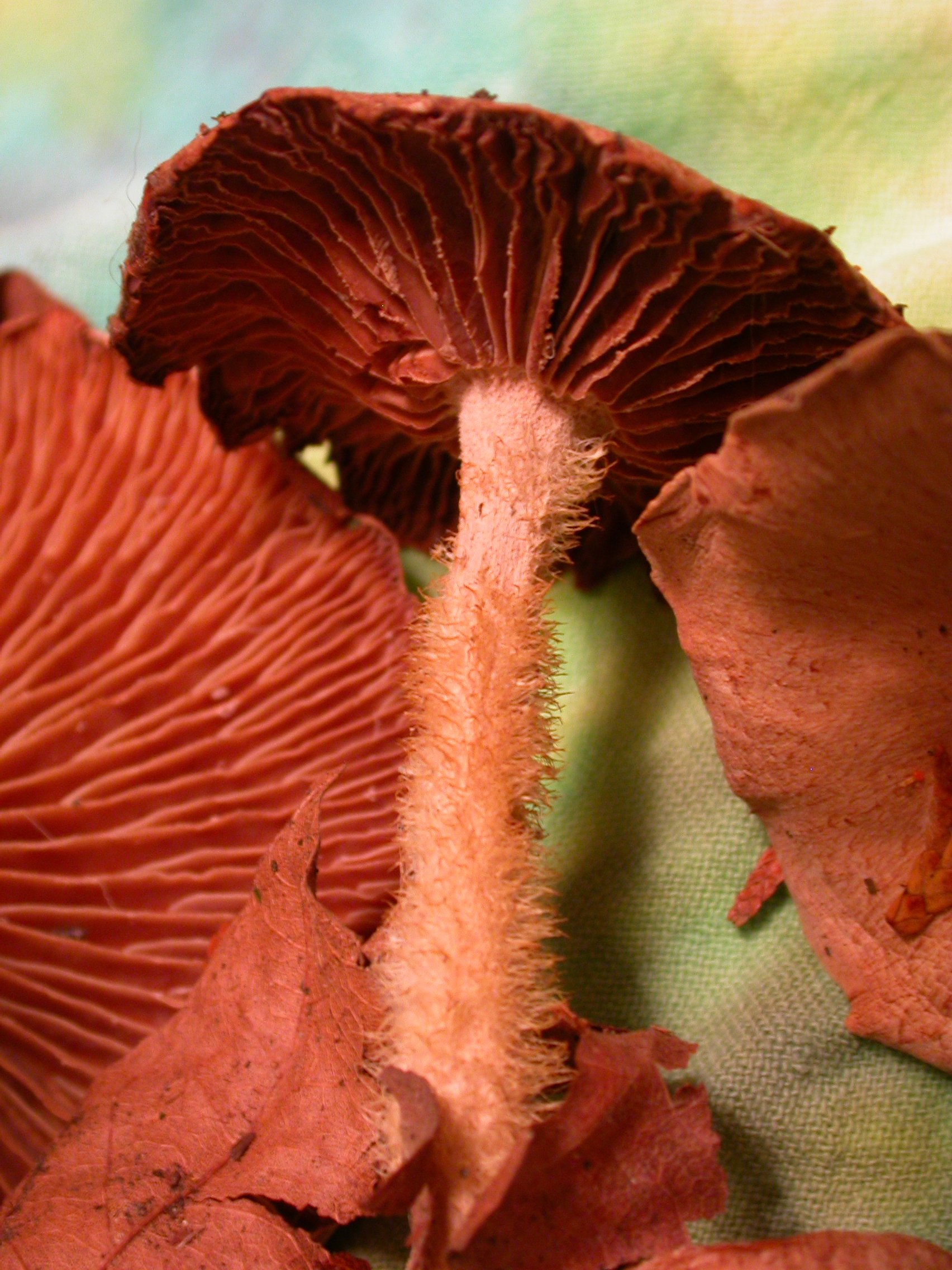
I have exactly no clue what this mushroom might be, or even what genus it belongs in. It, too, was found growing under some trees on the roadside of West Lake Sammamish Parkway, on 10-29-03. The fuzz on the stipe was rather bristly, like pig's hair. Otherwise it was completely unremarkable.
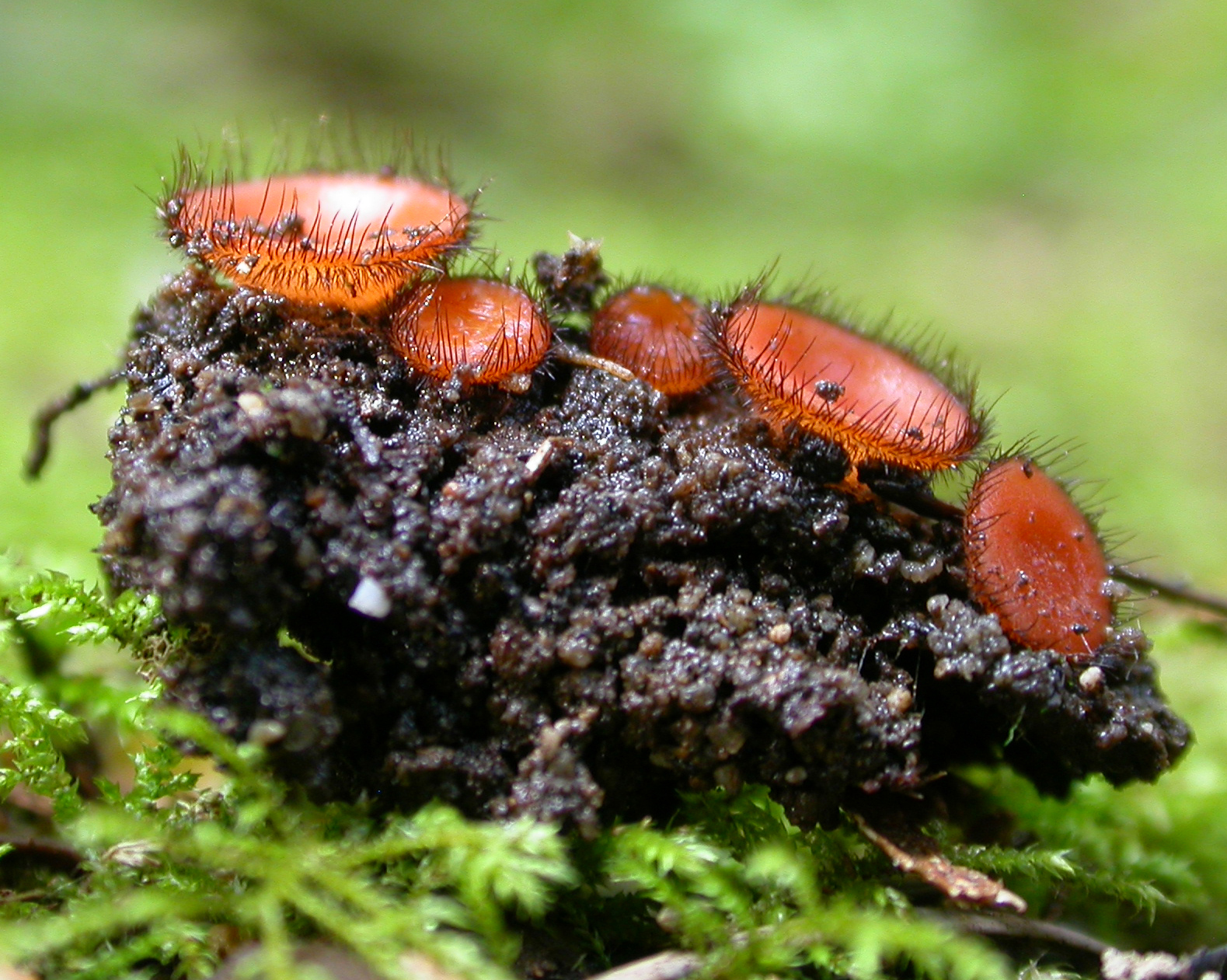
Another unidentified fungus. Obviously, its some sort of cup fungus, and obviously, it's on the furry side for a mushroom, too. I just like fuzzy things, I guess. As you can tell by using the moss in the foreground for scale, these guys were pretty teeny in real life. It was found in a park off of West Lake Sammamish on 4-26-05.
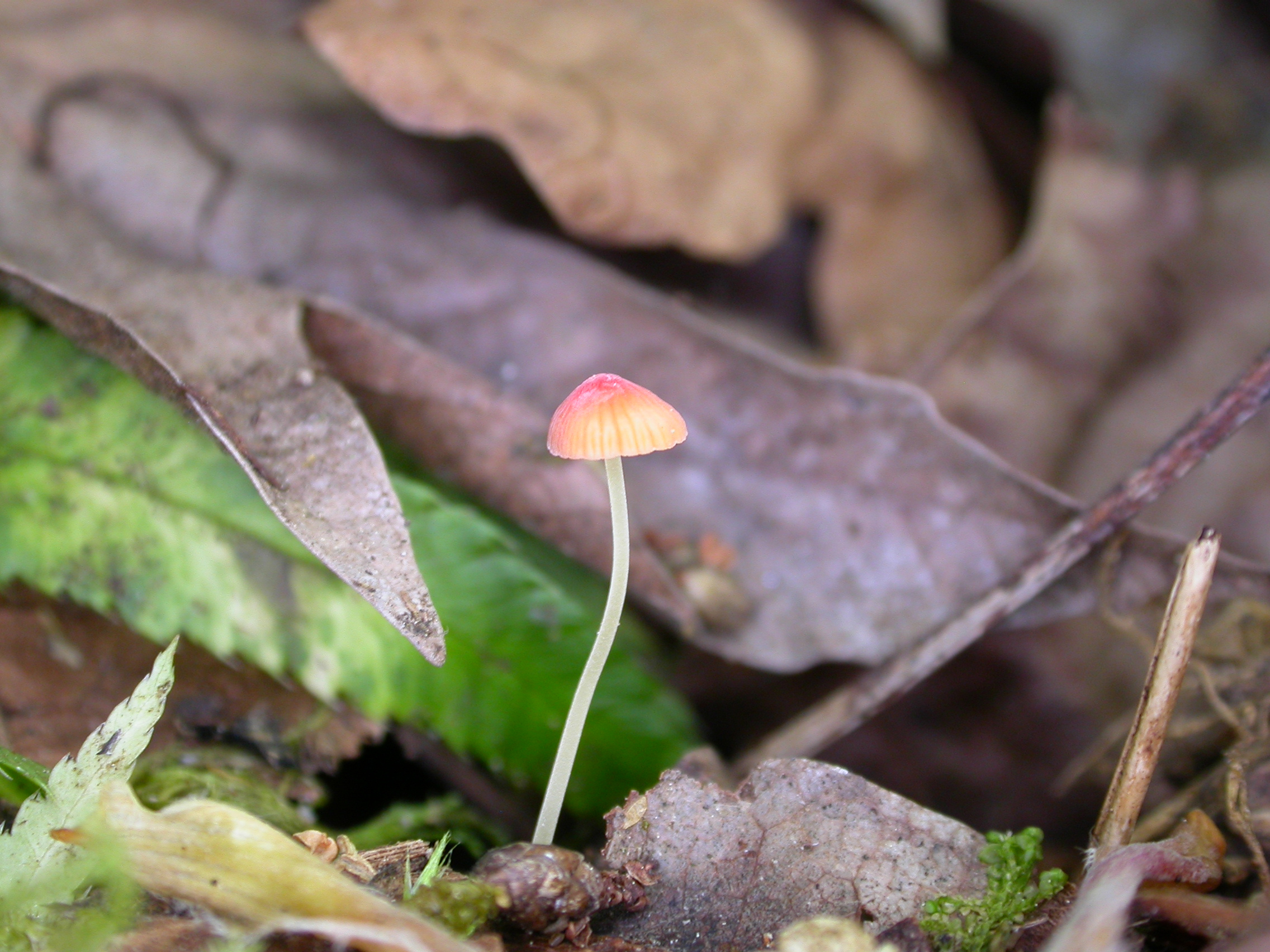
More fun with Macro mode! This is a Mycena. It is one of the largest and least varied genera in the entire taxonomy of fungi. Most of the species can be distinguished from one another by exciting things like spore ornamentation (visible under the microscope) and pellicle orientation (also visible under the microscope). Since none of them are edible, or in fact good for much of anything, and some of them are barely big enough to see, most people classify them all as "YAMS" (Yet Another Mycena Species). This one might be M. acicula, or M. adonis, or M. haematopus, or M. monticola. Or it might not. Its tiny. Its pretty. Appreciate it, and move on.
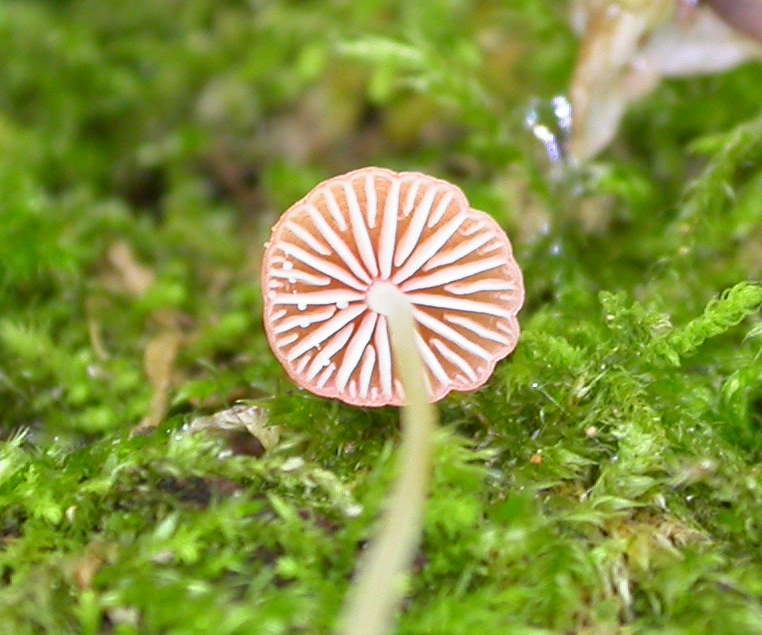
Okay, so we won't move along *quite* yet. Aren't the gills on this little guy just amazing? This is the same Mycena as seen in the previous photo. It was found in a park off of West Lake Sammamish on 4-26-05.
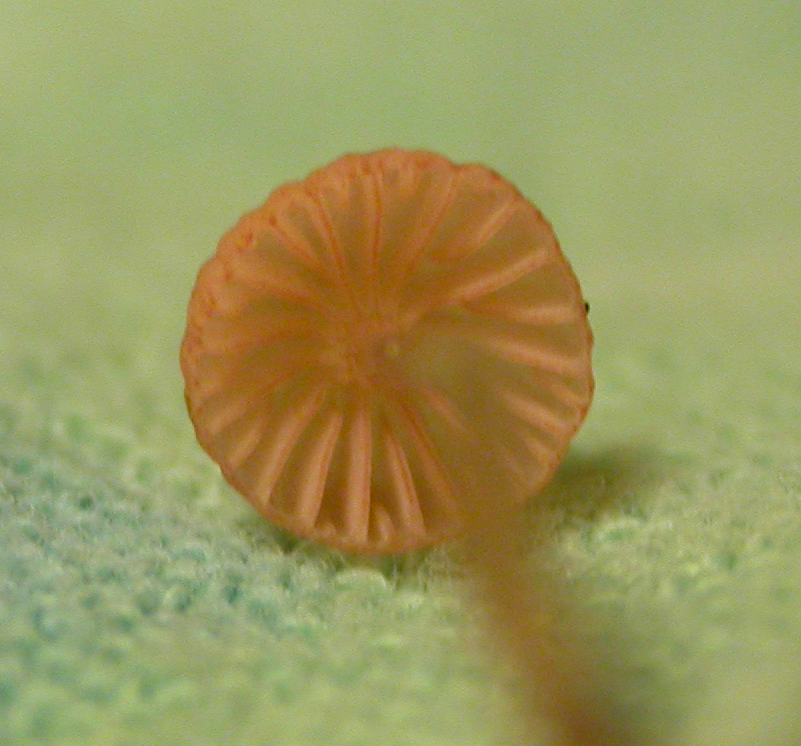
More little Mycenas! This shows a great view of the gills on this little guy, which was found in the park on 9-15-04. Using the weave of the fabric for scale, you can tell how small this thing really is.

Weren't we surprised to find these little guys growing in with our oregano! These guys keyed out to Psilocybe stuntzii, and the greenish-blue tinge to some of them implies that they were "active." Notice that some of them have been eaten by slugs. We did not notice any little black lights or Pink Floyd coming from the garden, though, so if the slugs were feeling anything they weren't saying.

There's a great story about how P. stuntzii came to be named. The species was first described by an amateur mycologist named Paul Stamets. Stamets wanted to be a professional mycologist, in fact he studied at the UW under Dr. Stuntz. Dr. Stuntz, however, would not take Stamets on as a doctoral student, allegedly because he frowned upon Stamets' interest in the psychedelic fungi. Nonetheless, Paul went on to become a respectable amateur and go into business raising (legal) mushrooms for all sorts of uses. And, when he described his first new species, of course he named it in honor of his professor and mentor... never mind that it happened to be a psychoactive Psilocybe! Personally, I think this is one of the greatest tales of poetic justice in all of academia.
These guys grew in our oregano pots from October to December of 2001. The oregano was tasty, but did not seem to absorb any of the mind-altering properties of its fungal companion.
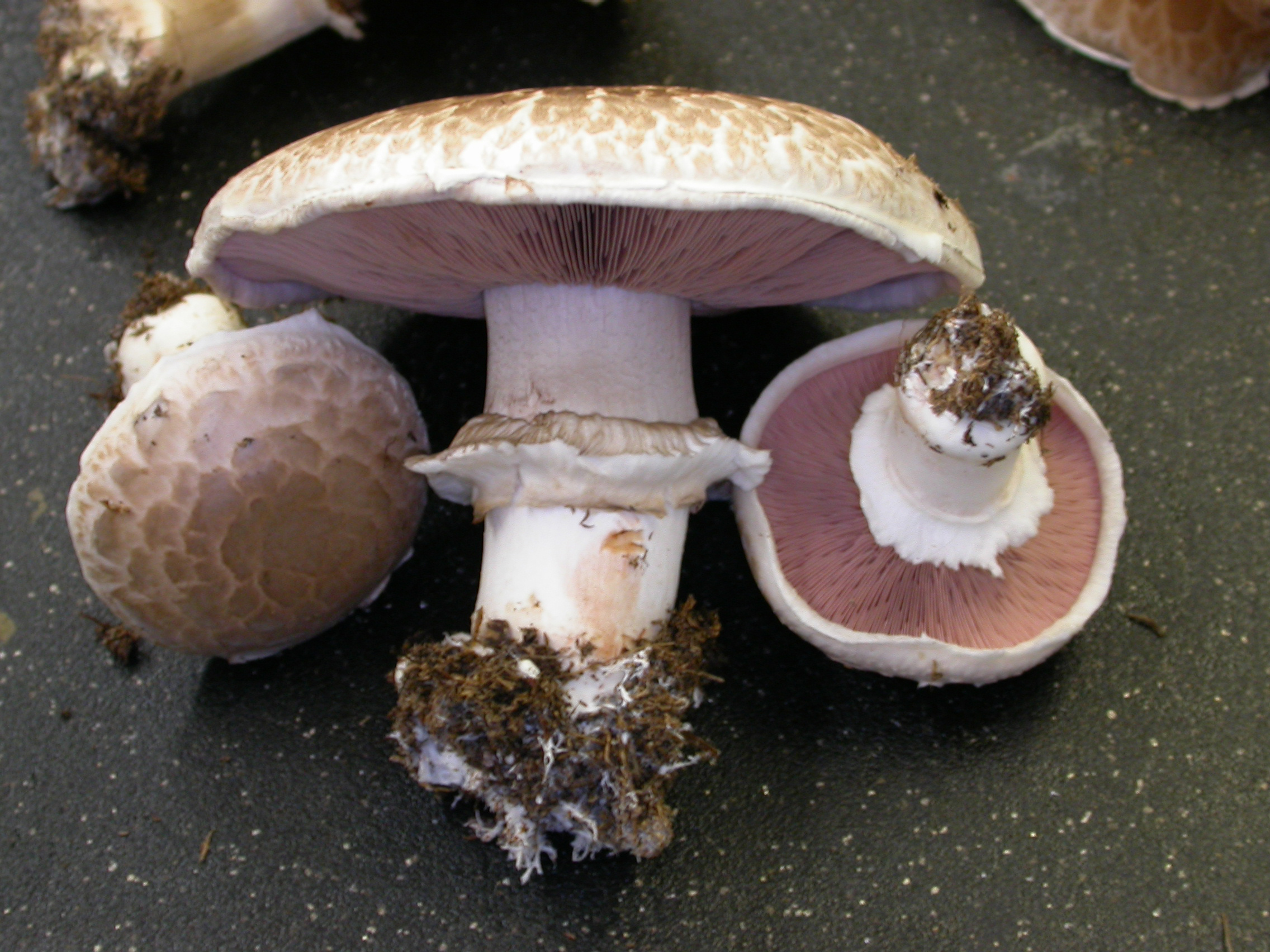
This may count as "cheating" but these are pictures of some Portobello mushrooms that we grew. This picture was taken 2-23-03, which is notable because A. bisporus likes cooler weather and did not do very well when we tried to grow them in the summer. Contrast these guys to the A. augustus at the top of the page. Note that the gills are pink rather than white, that the veil is relatively thick and "sturdy" looking compared to augustus, and that the stem is free of any white fluffy material. Note that otherwise they are pretty darn similar! Also contrast these guys with any Portobellos that you find at the grocery store! The gills are a nearly iridescent pink in real life, the picture makes them look dull by comparison. The gills turn dingy pink after about 24 hours, brownish-pink by 48 hours, light brown by 72 hours, and dark brown after about five days. The spores are chocolate brown, and color the gills as they mature. Keep this in mind when picking Portobellos from the grocery store! You'll never find fresh-picked Portobellos like this, but if they still have a tint of pink to the gills they're probably as fresh as you'll find.
Compare to Agaricus augustus above and A. augustus in other areas of Western Washington, or wild Agaricus at Denny Creek
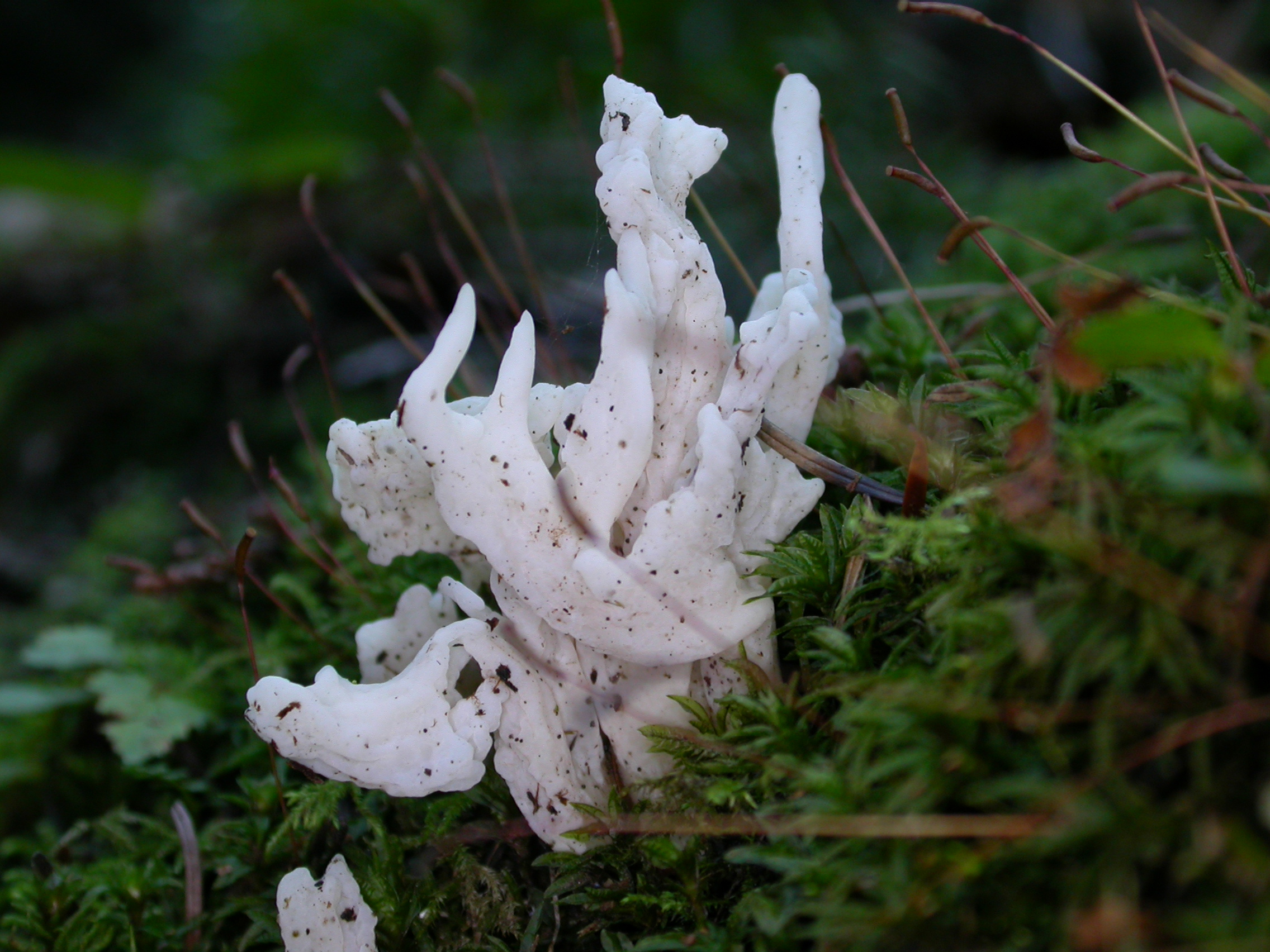
This is a club fungus of some kind. I've never bothered trying to key out the species, but I thought the bright white made an amazing contrast to the moss around it. You can see the moss's sporophytes and a couple of pine needles for scale. This was one of the first photos I took with my shiny new camera and ringlight on 2-23-03, in the park. Needless to say I was thrilled with how it came out!