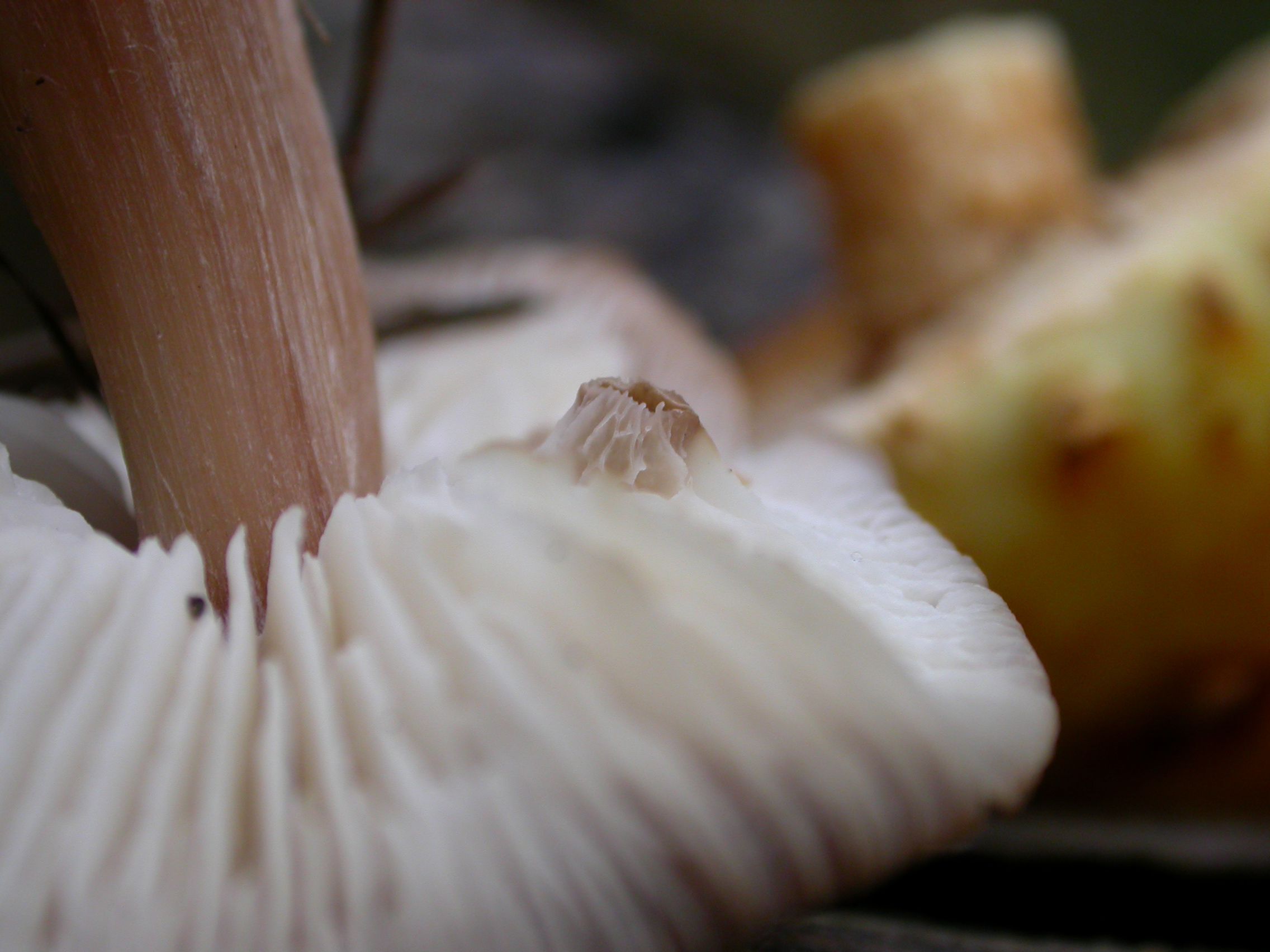
“Mutants” are fairly common in mushrooms. One of the more common kinds of “mutant” is gill tissue growing in odd places. This particular mushroom has a little circlet of gills growing off of a couple of normal gills, with what looks like a little ring of cap tissue inside. I did not try to key this mushroom out, I don't even known the genus (that's a Pholiota in the background, but it's not related to the one in the foreground), but I happen to like mutants.
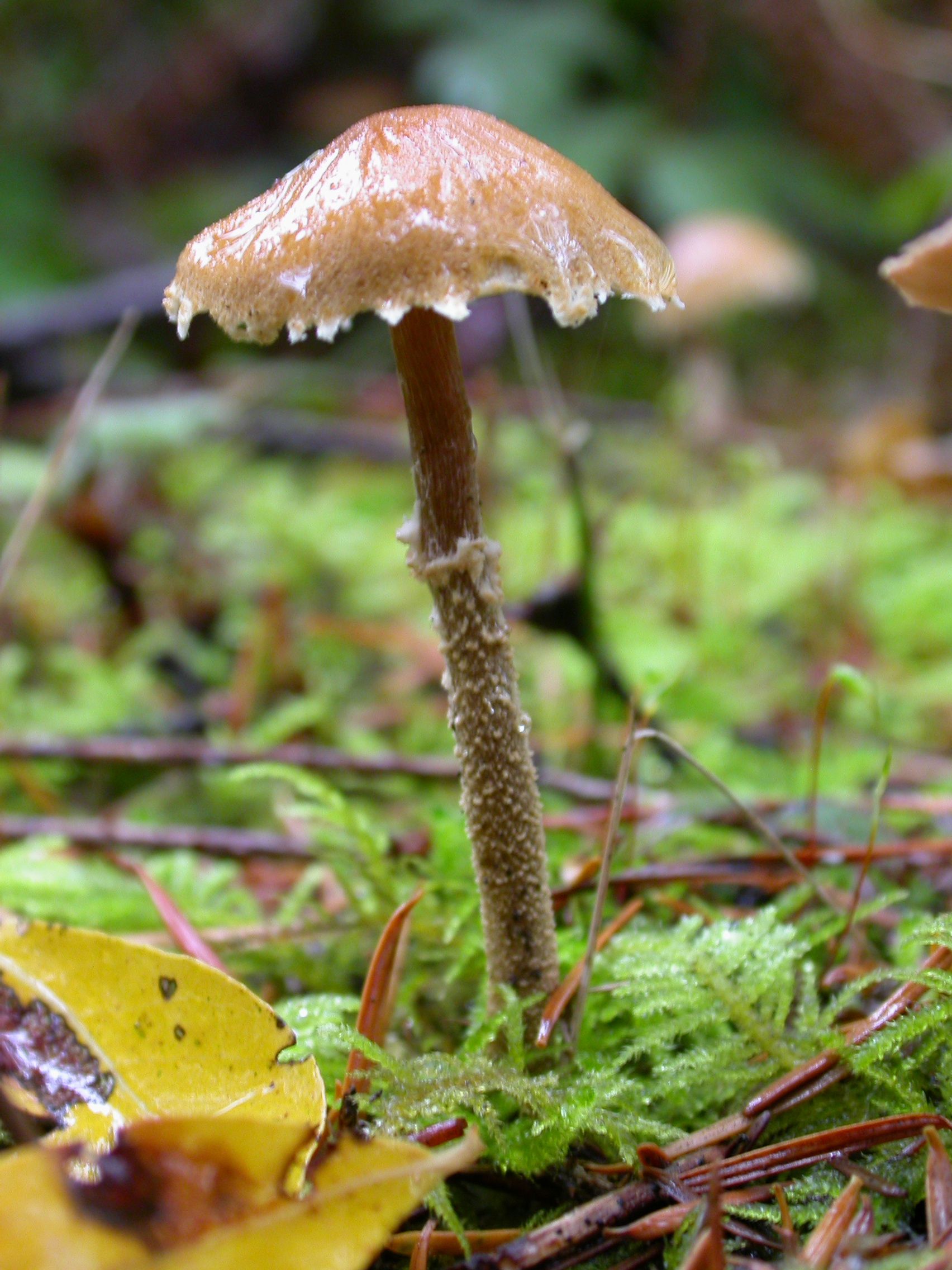
This mushroom is plenty tiny, but is (for once) probably not a Mycena. Its stalk has a stiff, woody look, not the fragile, smooth look of the Mycenas. It might be a Galerina, or maybe an inactive Psilocybe, but is probably some funny little genus like Myxomphalia or Crepidotus or something. Whatever it is, I like the woolly stalk and the veil remnants hung around the margin.
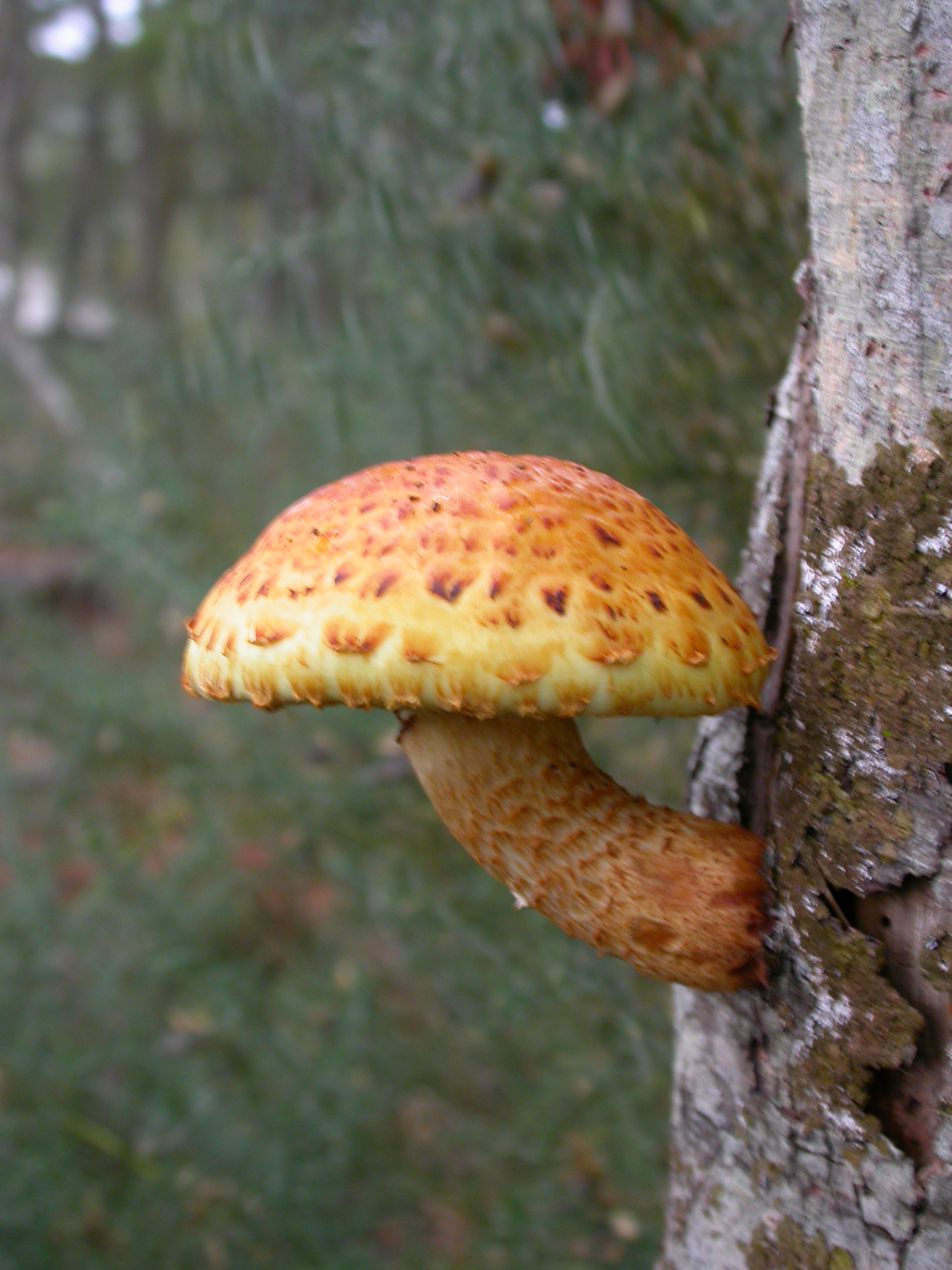
This mushroom is undoubtedly a Pholiota, although it is very large and stout for the genus. The cap in this case is about 10cm in diameter. I suspect this mushroom is an unusually manly example of a more typical species, but once again I have not keyed it so I can't say for sure.
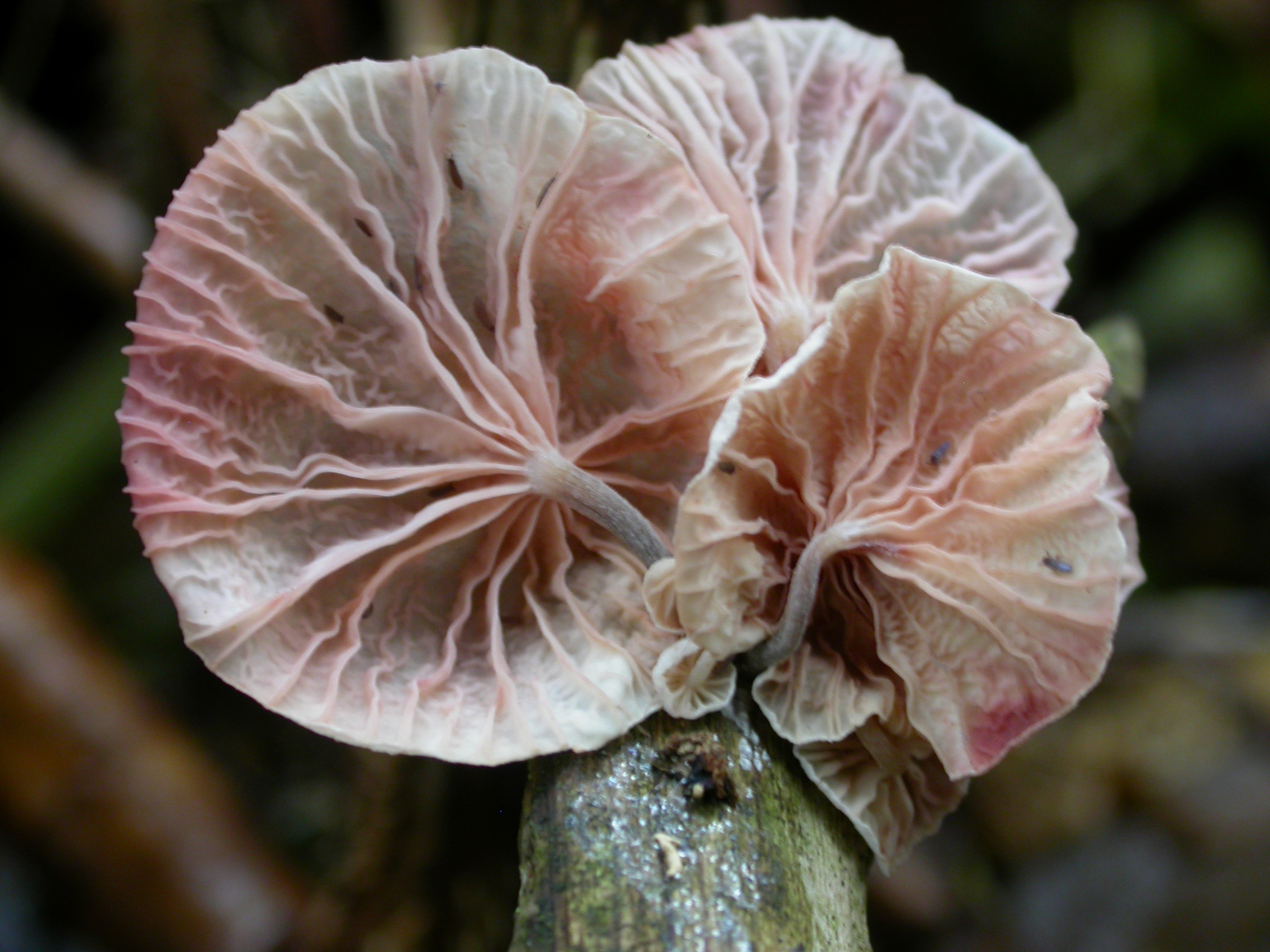
These little guys are strange. The gills are more wrinkles than true gills, like a Cantherellus, but being tiny, pink, and growing on wood pretty much rules out any relation to that genus.
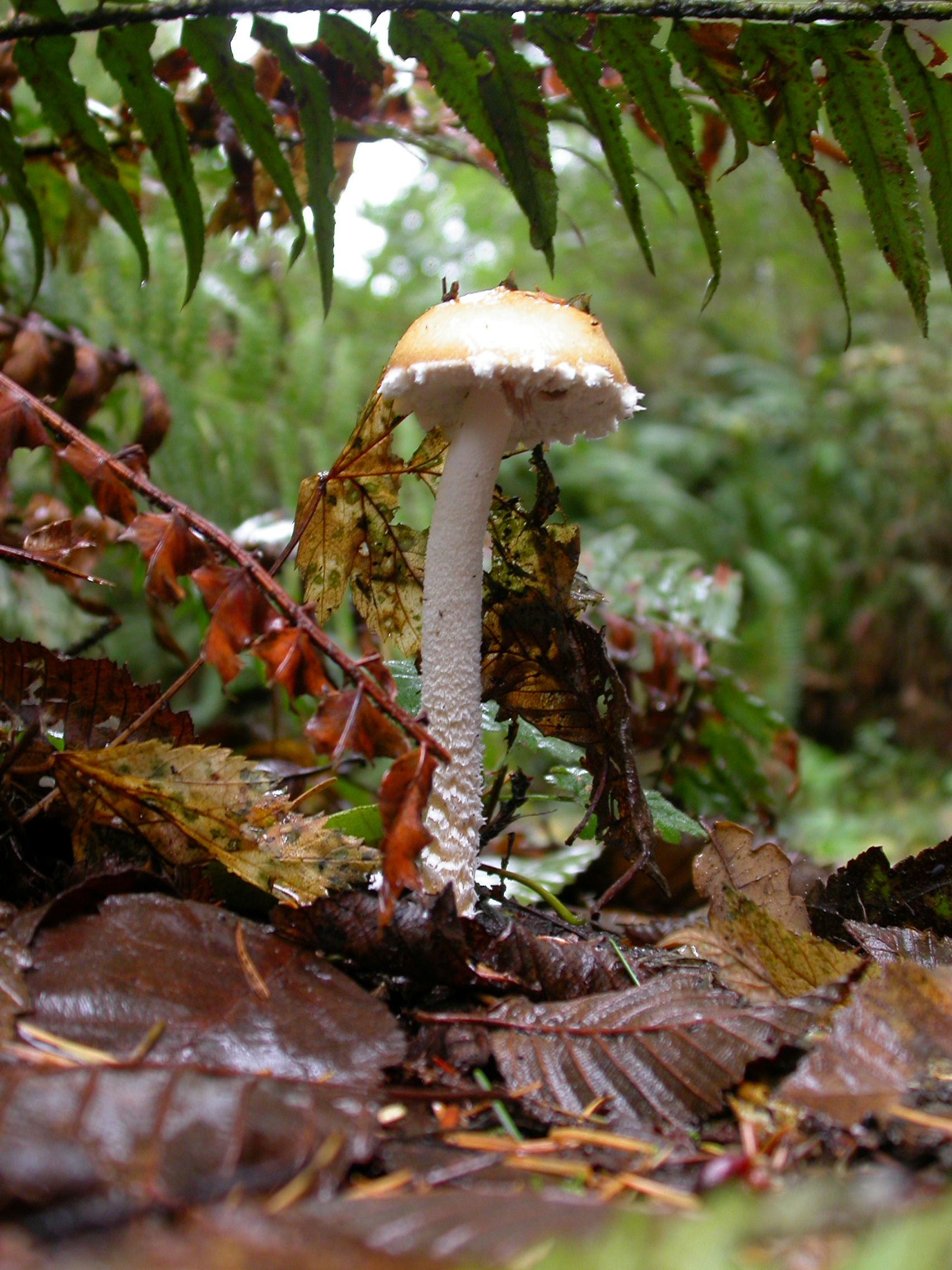
At last, a mushroom that I can identify with some authority. And what mushroom more appropriate for that distinction than Stropharia ambigua. This is one of the more common mushrooms to find on the woodland edge, distinguished by its fairly large size (this one's about 6-8 inches tall), smooth, rounded, yellow-brown cap, and copious veil remnants, usually hung from the margin rather than making a ring.
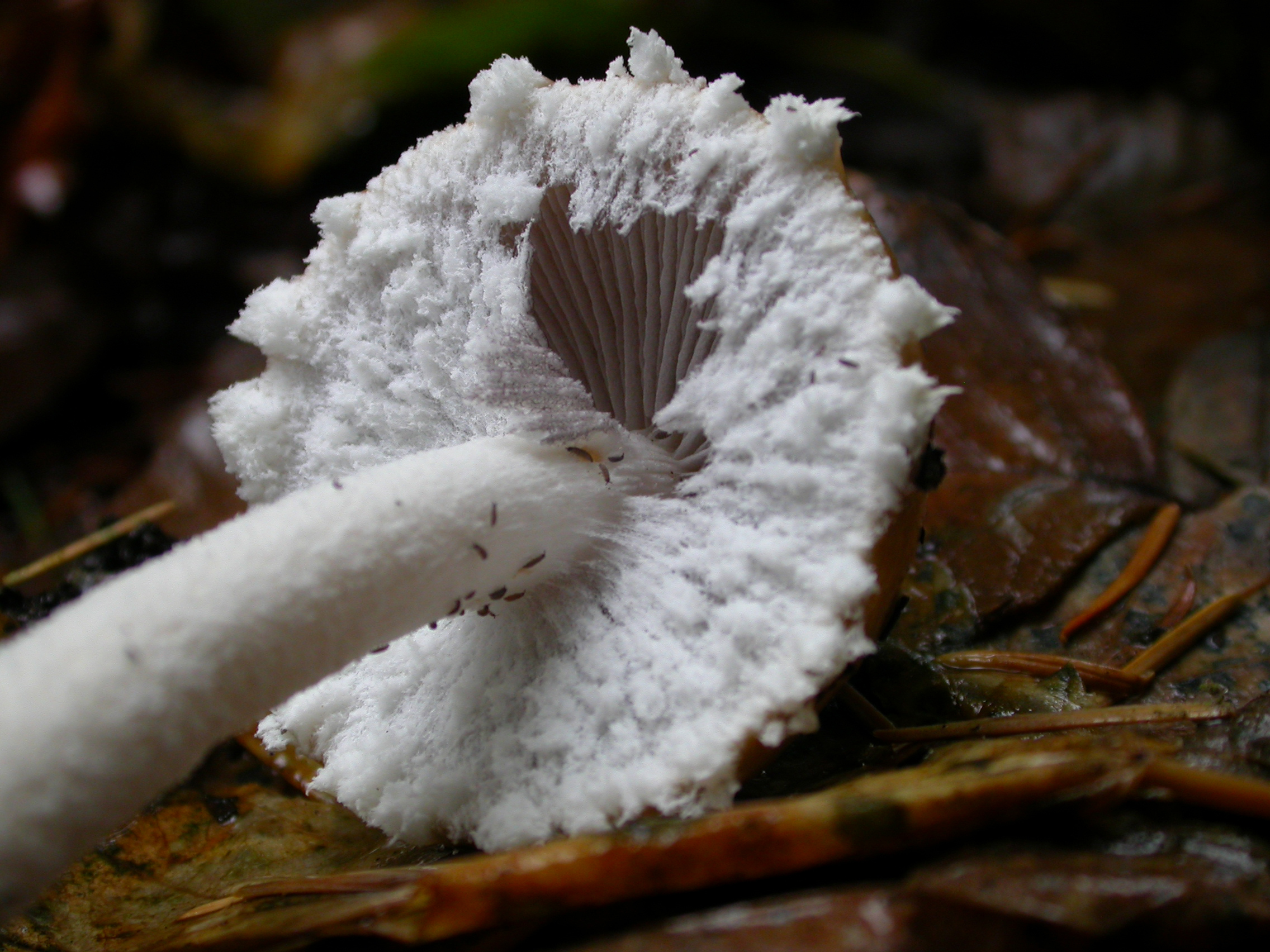
The spore print is starkly black, perhaps unexpected for such an otherwise pale mushroom. You can see a hint of the spore deposit starting on the veil in this photo